
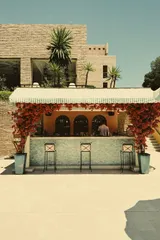
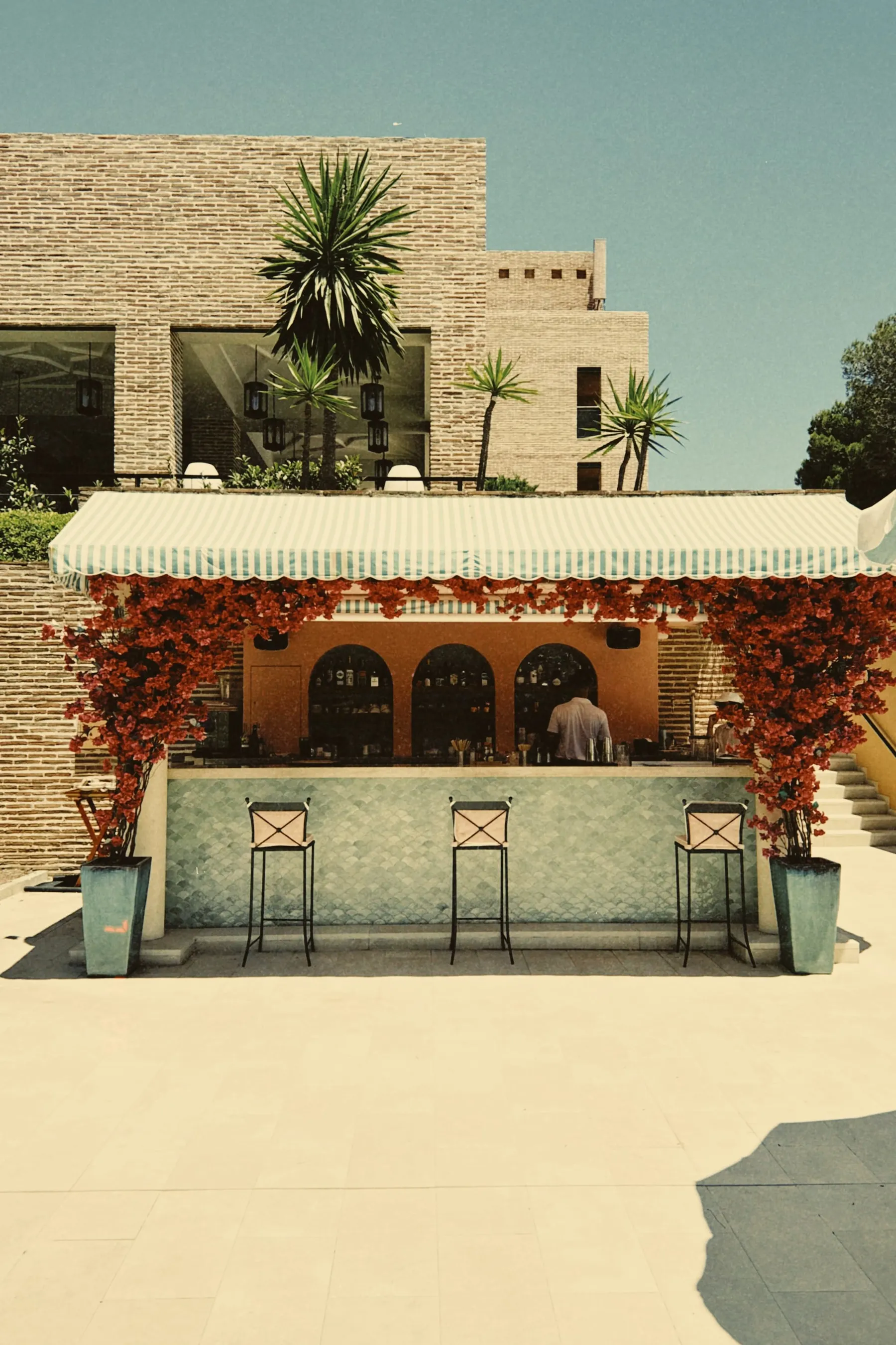
Marbella, Spain. The resort handles the sun the way Andalusian building tradition always has.
The coast between Málaga and Estepona has developed in two varieties. Either the pastiche: whitewashed façade, arches cast in concrete, click-fit terracotta, a wrought-iron lantern from the same catalogue as the three neighbours'. Or the glass block that sets air conditioning against 34 degrees and lets the compressor do the work the architecture doesn't. Both solve the heat with electricity. The old Andalusian solution was geometry: mass that stores the night, courtyards that draw air through, water where sound carries, shade that is in place before eleven o'clock. Gran Marbella is built to the other recipe. It is a new build from 2025. But it doesn't behave like one.
The Setting
The address is Real de Zaragoza, one of the stretches in east Marbella that hasn't been carved up into small plots. The resort opened in August 2025 as number nine in the portfolio of Iconic Hotels & Resorts, the same company that also represents Cliveden House and The Lygon Arms in England and Hotel Excelsior in Venice. Three houses with several hundred years of history each. Here, though, there was nothing to inherit. Goddard Littlefair has placed five buildings and four pools on the site. The same architect responsible for the layout and design has also done the rooms.
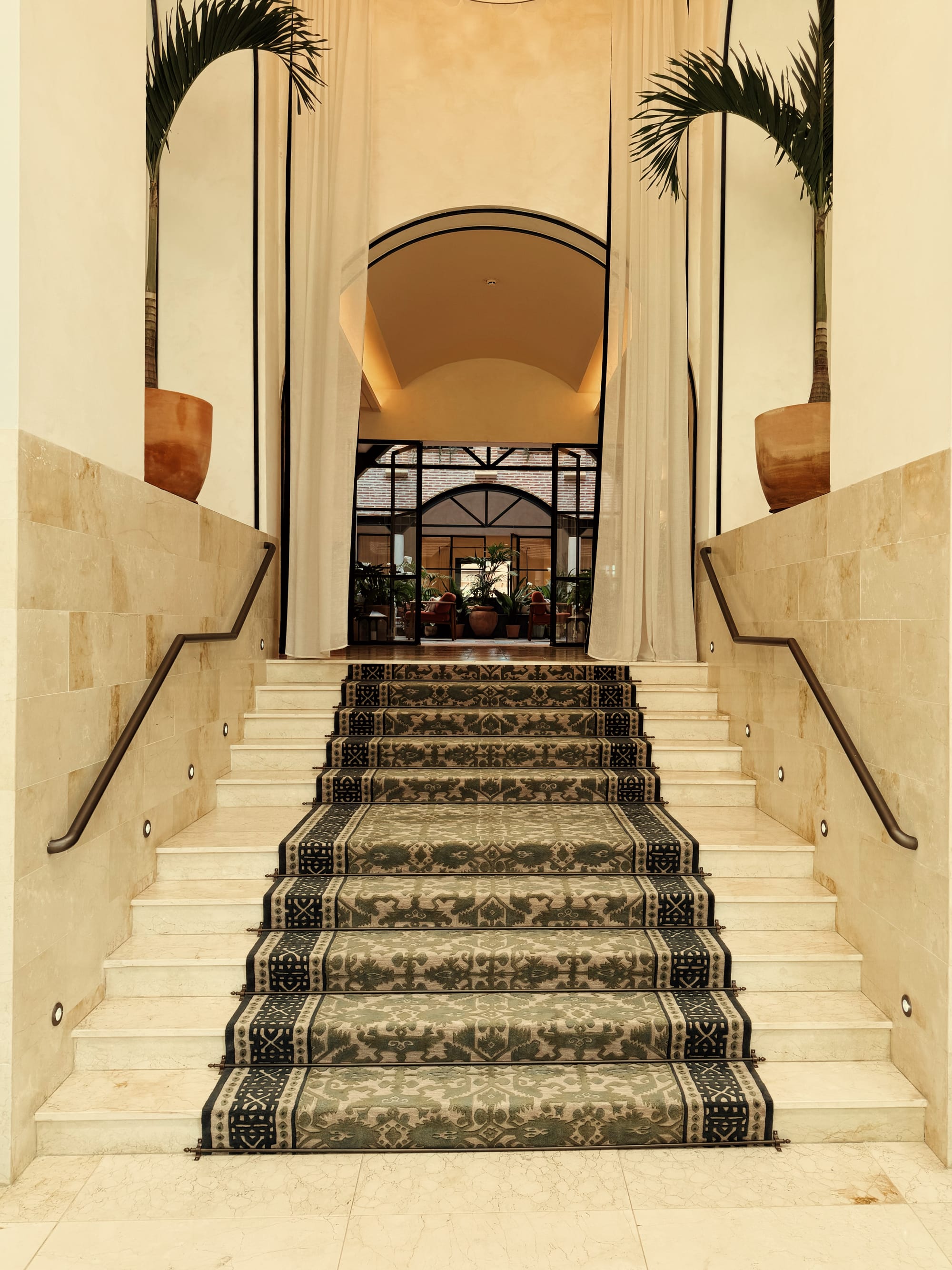
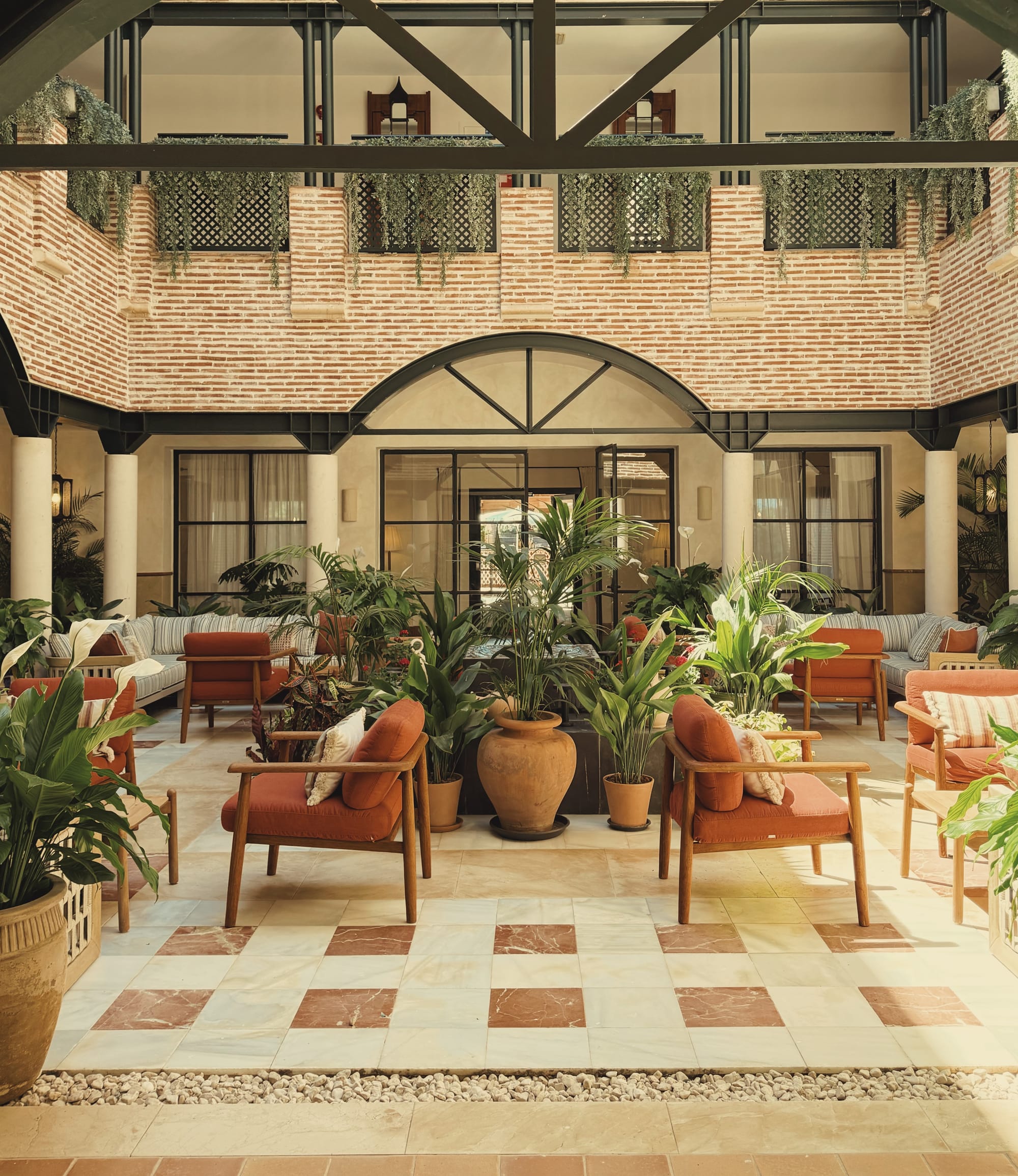
The stakes are high. A new building that sets out to borrow age can all too easily end up with plasterboard where something else should have been, arches glued onto a concrete frame, a façade that quickly turns Andalusia into costume. The approach here is to borrow principles rather than style. The courtyards are inward-facing, with water at the centre, planting beds dense enough to give shade from the very first summer, and a ten-metre hall where light falls from above, from a source you can't see from the floor. Outside, the July heat shimmers. Inside, it is cool.
Spreading across five buildings costs money to run. More entrances to staff, longer routes for housekeeping and room service, a buggy shuttling between the hotel and the beach. But the gain is considerable for those of us who stay. On a Saturday in July you walk to breakfast and barely meet anyone on the way. Even though the hotel is fully booked.
The Rooms
A hundred and twenty-five rooms, ten suites.
Four choices show how the house thinks.
The first is the threshold. The floor-to-ceiling doors to the terrace open fully, and the transition outside is flush. No lip, no protruding track. That line has to be resolved with falls, drainage and a membrane that withstands rain in November, and it costs in detailed design and in risk long after handover. The gain is that the room doesn't end but continues onto the balcony, which naturally becomes part of the room.
The second is what you touch. Lime plaster on the walls, woven panel inserts, beamed ceilings, glass doors with linen curtains to the dressing area, and marble in the bathroom. The light switches are brushed brass. The ice bucket is clad in leather. No plastic where a hand lands.
The third is what they have left out. No signature lamp to photograph, no art placed to be tagged, no wall that shouts. Geometric patterns in the textiles, and little else. The rooms whisper.
The fourth you see by comparing from the bottom up. Between the cheapest double and the suite the palette of materials doesn't change: the same plaster, the same switch, the same flush threshold. What you pay for is square metres, aspect and terrace. Not better quality. Most hotels do the opposite and save the brass for the top floor.
The Table
Breakfast is served at Terraza, which also serves as the hotel's restaurant in the evening. The buffet is the usual: bread, cheese, sliced fruit and the obligatory range of egg dishes. There is also a short menu of Andalusian dishes to order, included in the price. The tables are set with plenty of space between them, outdoors, with no roof to throw the sound back. You hear cutlery and water, not the conversation at the next table.
Terraza becomes the hotel's restaurant in the evening. The atmosphere is like the food. Good. But it is not on this terrace that the hotel has set the bar for the experience.
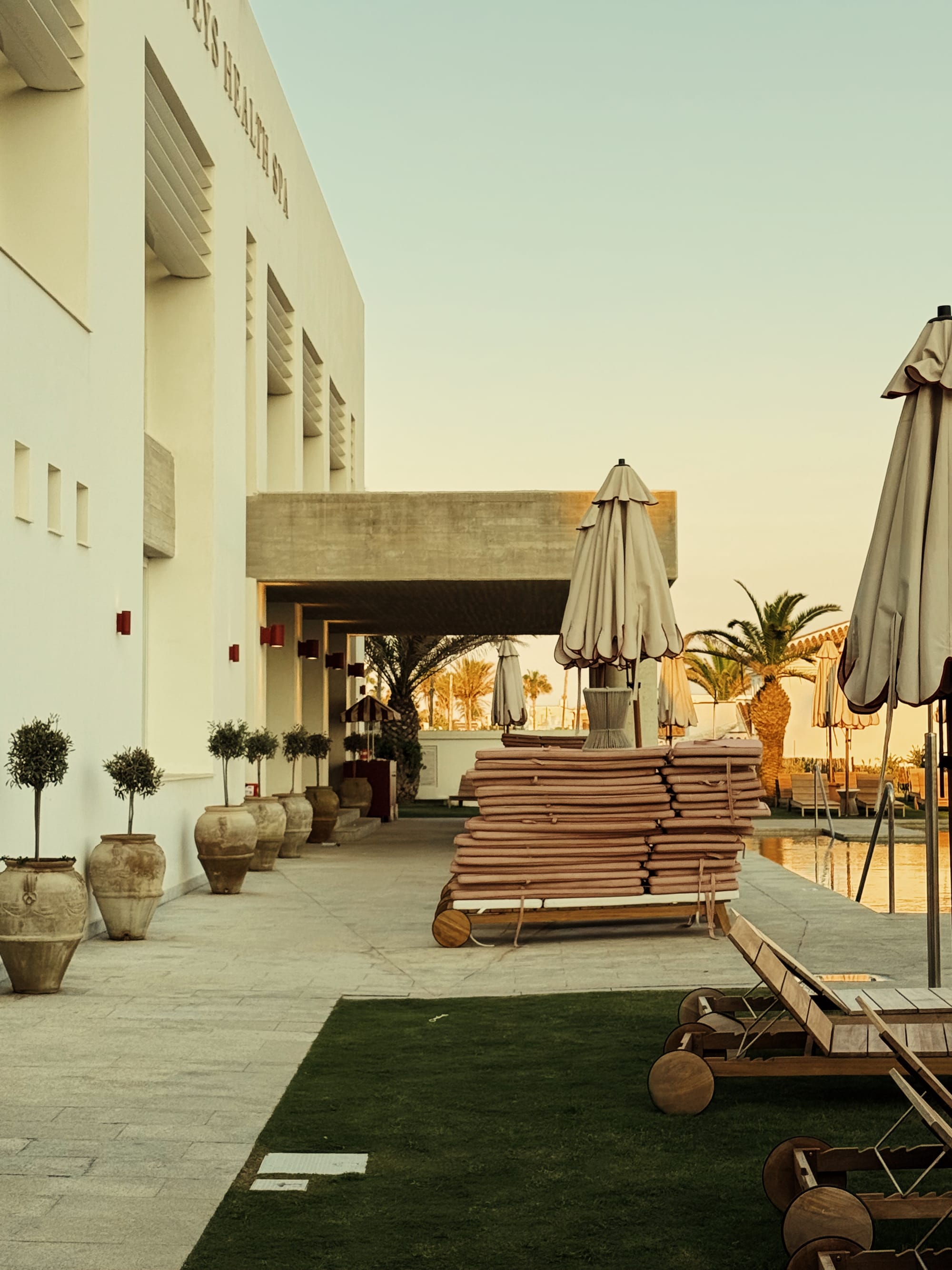
Amù is the place to be seen. The beach club lies three or four hundred metres from the hotel, with red and white parasols with scalloped edges, a pool that ends at the sand and a DJ from the afternoon. The food is Mediterranean without surprises. Reception sends a buggy in both directions, which is an operating expense disguised as hospitality.
Garden Bar is the place not to be seen. Within the grounds, between the pool and the saltwater, empty at four and full enough at seven. No DJ.
The Detail
The detail at Gran Marbella is the cabinet in the room.
It sits in a niche in pale oak, a strip of light along the top, a mirror behind, so that the room plays its part here too. On the top shelf, the legends, led by Johnnie Walker Black Label and Grey Goose. Spanish red wine from Rioja. Bottles large enough to make a drink before and after dinner. Wine glasses hang by the stem from a rack above. Leather tumblers are stacked alongside. Separate cups for coffee and for tea. A kettle in matte metal, a leather ice bucket and a coffee machine one notch above standard.
This is a bar. It costs in tied-up capital across a hundred and twenty-five rooms, in glass that must be polished by hand, and in every drink mixed in the room instead of in the Garden Bar.
At the same time, the sofa is right behind it. And a marble table with a selection of magazines. The terrace with its view of the Mediterranean is also just two metres away. The cabinet says you are welcome to stay in the room, and the room says someone has spent time on it first.
A bargain that goes both ways.
Worth the Journey
The place is for those who want Marbella without driving into Marbella. The resort is large enough to stay in for five days. Four pools, a beach club you must dose yourself, and the Champneys spa, which could well be the main reason you came. It suits families, with a family pool, adjoining rooms and a hoist in the main pool. And it suits two people who want a terrace and no programme.
I have only been there in July, at over thirty degrees, and can't vouch for how the courtyards behave in November, but I believe the Andalusian architecture works just as well in both seasons.
Facts
Address
Av. José Ribera 25, Marbella, Málaga, Spain
Rooms
125 rooms, 10 suites. From around NOK 4,200
Season
May and September. July is hot, August is full. September is probably ideal.
Getting there
Málaga airport, 45 minutes by car. Buggy between the hotel and the beach club.
Good to know
Family pool and adjoining rooms. Four accessible rooms, hoist in the main pool. Champneys spa.
Link
https://www.granmarbellaresort.com/